

Nail Art Classes in BC — What the Training Covers
Published September 1, 2026 · Legends Academy · Abbotsford & Langley
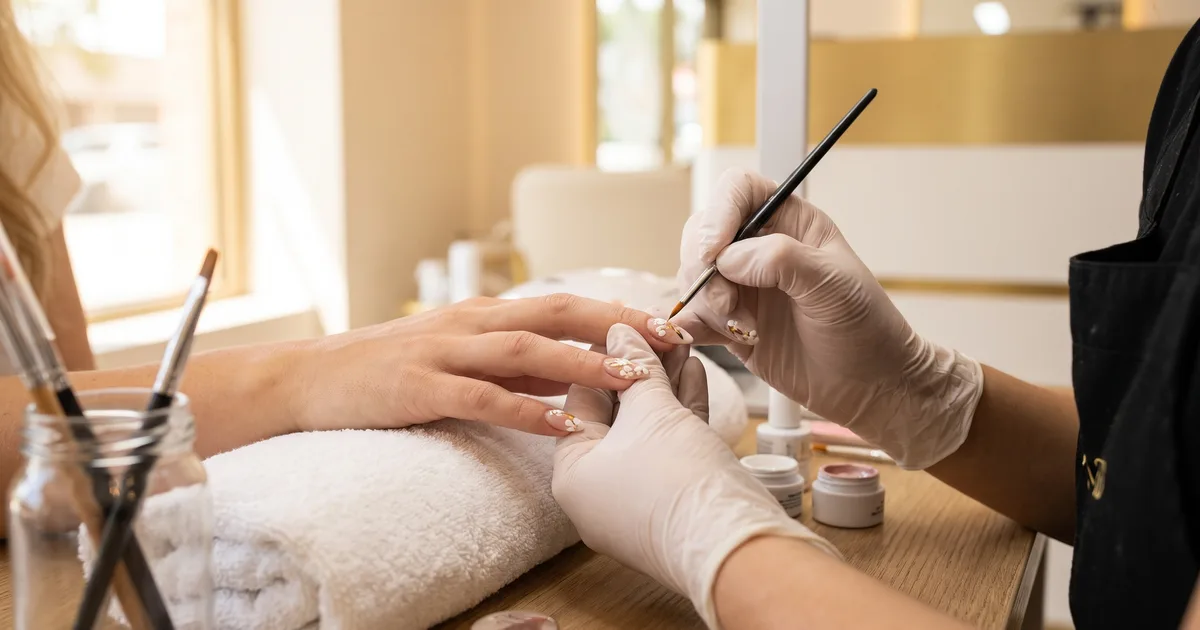
Search for nail art classes and you get finished work: chrome, cateye, encapsulated flowers, hand-painted detail photographed under a ring light on the day it was done. What that image cannot show you is whether the set was still intact a fortnight later.
This page covers what nail training works through, what it costs and how long it takes, and what British Columbia does and does not require of the people doing the work.
Nail Technology at a glance
- Tuition
- $5,600
- Length
- 400 hours over 17 weeks
- Schedule
- Tuesday to Friday
- Campuses
- Abbotsford and Langley
- Next intake
- Dec 1
Nail art is taught inside this program rather than as a standalone short course. Funding options are set out on the funding page.
Three systems, and why it matters which
Most beginners' first question. The system decides how much structure you have to work with, how the art is applied, and what the salon needs to have in place around you.
Gel polish
Thin colour cured under a lamp, worn on the natural nail. It adds almost no thickness and no length, so it is the shortest appointment and the one most people meet first. Nail art on gel polish is painted flat.
Acrylic
Liquid monomer mixed with powder polymer, sculpted by hand and air-cured. It is the most structural of the three, which is why extensions and heavier sculpted art usually sit on it. It is also the system that generates filing dust and vapour, so it is the one ventilation requirements are written around.
Builder gel
A thicker gel cured under a lamp, used to add strength or a small amount of length. It sits between the other two: more structure than gel polish, less odour and dust than acrylic. Encapsulated art — design sealed inside the layers rather than painted on top — is usually built here or in acrylic.
What the program works through
Roughly in order. Each stage carries the one above it, which is why art is taught after structure rather than alongside it.
The natural nail, before anything goes on it
Cuticle work, sidewall cleanup, shaping to the free edge, and reading the nail plate — thickness, oil content, how it flexes. Preparation is the stage instructors spend the most time correcting, because faults introduced here surface later as lifting at the edges.
Apex and structure
Where the thickest point of an enhancement sits, and how the curve travels from cuticle to tip. Apex placement is one of the faults that shows up as breakage days after a set that photographed perfectly, which is why it is taught and checked directly rather than left to be discovered on a client.
A clean, even base
Flush cuticle line, no flooding into the sidewalls, consistent thickness across all ten nails. Art applied over an uneven base reads as uneven art, so the base is assessed before design work is marked.
Brush control and colour behaviour
Pressure, angle and how far product travels before it sets. Then how pigments behave over one another — what stays opaque, what goes muddy, what needs a barrier coat between layers. Hand skills are built by repetition, which is what the practice hours are for.
Design vocabulary
Chrome and cateye pigments, encapsulation, marbling, French and its variants, hand-painted detail, stamping, foils and three-dimensional embellishment. Each behaves differently under different top coats, and each has a failure mode worth meeting in a classroom.
Removal without damage
The least photographed skill and the one clients judge hardest. Soak-off timing, e-file safety, and knowing when to stop. Removal is assessed as its own competency rather than treated as the end of an application.
What British Columbia requires
Most people assume there is a licence. There is not, and what is regulated instead is more specific than a credential.
What is not required
British Columbia does not require a licence to work as a nail technician. SkilledTradesBC runs Skilled Trades Certification — compulsory certification — but it currently covers seven electrical and mechanical trades, with the two crane trades designated to follow. Nail technician and esthetician are not designated SkilledTradesBC trades at all. Hairstylist is designated, with a full apprenticeship and Red Seal pathway, but its certification is voluntary rather than compulsory.
What is required
The premises. A nail salon in British Columbia is a Personal Service Establishment — a business providing a personal service to or on the body of another person — operating under the Public Health Act and permitted and inspected by the regional health authority. For Abbotsford and Langley that authority is Fraser Health.
What the inspector checks
Reusable instruments and work-contact surfaces cleaned and then disinfected, in that order, between clients. Cracked, chipped or rusted tools discarded rather than kept in rotation. Single-use items used once. A sink designated for instrument cleaning. And local exhaust ventilation where chemical disinfectants or acrylic application are in use. These are published requirements.
The part nobody advertises
WorkSafeBC has issued a risk advisory specifically on chemical exposure in nail salons, naming formaldehyde, toluene, methacrylate compounds and dibutyl phthalate, with exposure occurring by vapour and by dust — filing dust included — during polish, glue, acrylic and disinfectant use. The advisory associates long-term exposure with reproductive effects, nervous system damage, liver and kidney failure and cancer, alongside skin, eye and respiratory irritation, and notes reception staff are exposed too.
What is done about it
The controls are established. WorkSafeBC frames the principle as eliminating exposure or reducing it to the lowest level reasonably achievable below the exposure limit, and the provincial guidelines call for local exhaust ventilation where disinfectants or acrylic application are used — extraction at the table, rather than a fan in the corner. Product handling, glove and mask use, and dust control complete it. This is trained practice, and it is a fair question to ask any salon before you take a chair there.
Questions before you apply?
Talk to an admissions advisor
Cost, funding, start dates, what a school day looks like: ask anything. Choose your campus and an advisor will call you back at a time that suits you.
Or call now: Abbotsford 604-859-5777 · Langley 604-530-4678
Common questions
Are there standalone nail art classes, or only the full program?
Legends Academy teaches nail art inside the Nail Technology program rather than as a separate short class. The program runs 400 hours over 17 weeks, Tuesday to Friday, at both the Abbotsford and Langley campuses, with tuition of $5,600. Art sits in the second half, once preparation and structure are established, because design applied over an unstable base does not survive wear. If you are looking for a weekend workshop rather than a diploma, that is a different kind of training and worth saying so when you call.
Do you need a licence to do nail art in British Columbia?
No. British Columbia does not require a licence or provincial certificate to work as a nail technician, and nail technician is not a designated SkilledTradesBC trade. What is regulated is the salon: it operates as a Personal Service Establishment under the Public Health Act, permitted and inspected by the regional health authority — Fraser Health in Abbotsford and Langley. The requirement attaches to the premises and its practices rather than to a credential.
What do nail classes teach that online tutorials do not?
Correction, and the parts that are not visual. A video shows you what a finished design looks like and the order of the steps. It cannot tell you that your apex is sitting too far back, that you are flooding the sidewall on one hand only, or that your removal technique is thinning the nail plate. Those are diagnosed by an instructor watching your hands. A classroom also puts you through the sanitation and chemical-safety practice that a health inspector checks.
What is the difference between gel polish, acrylic and builder gel?
Gel polish is thin cured colour on the natural nail, adding no length and very little thickness. Acrylic is liquid and powder sculpted by hand, the most structural of the three and the usual base for extensions and heavier sculpted work. Builder gel sits between them — cured under a lamp, thicker than polish, used for strength or modest length. Acrylic generates the most dust and vapour, which is why ventilation requirements are written around it. Most beginners start on gel polish and move outward from there.
How long does it take to get good at nail art?
The design vocabulary can be introduced in weeks. Consistency across ten nails, on someone who moves, inside an appointment length that works in a salon, is built through supervised repetition — which is the reason the program is measured in hours rather than modules. Expect to learn the techniques well before you are quick at them.
Why does nail art lift or chip early?
Most often it traces back to preparation rather than product — the natural nail not properly cleaned and dehydrated before application, or product flooded onto skin at the cuticle and sidewalls. Breakage under ordinary pressure more often points to apex placement, so the enhancement has no structural high point. Neither fault is visible in a photograph taken on the day, which is why both tend to persist until someone corrects them in person.
Is acrylic dust harmful, and what should a salon be doing about it?
WorkSafeBC has published a risk advisory on hazardous chemical exposure in nail salons naming formaldehyde, toluene, methacrylate compounds and dibutyl phthalate, and identifying both vapour and dust as exposure routes. British Columbia’s Guidelines for Personal Service Establishments call for local exhaust ventilation where chemical disinfectants or acrylic application are used. That means extraction at the table, together with product handling practice and personal protective equipment. It is a reasonable thing to ask about before working anywhere.
What sanitation rules apply to a nail salon in Abbotsford or Langley?
Both cities sit in the Fraser Health region, so Personal Service Establishment requirements are administered by Fraser Health. The provincial guidelines require reusable instruments and work-contact surfaces to be cleaned and then disinfected between clients, cracked, chipped or rusted items to be discarded rather than kept in use, single-use items to be discarded after one use, and a sink designated for instrument cleaning. Confirm the current position directly with Fraser Health, as requirements are updated over time.
Worth saying plainly
Nothing in provincial law stops you learning this at a kitchen table, and capable technicians have started exactly there. Training is not a permission slip, because British Columbia does not issue one. What structured hours give you is an instructor correcting your hands, practice on people who are not you, and the sanitation and ventilation habits that the inspector checks and the tutorial skips.
Sources
- SkilledTradesBC — Skilled Trades Certification (Compulsory Trades)
- WorkSafeBC — Hazardous chemical exposure in nail salons (risk advisory)
- Province of B.C. — Guidelines for Personal Service Establishments, November 2017
- Province of B.C. — Best Practice Guidelines for Cleaning, Disinfection and Sterilization
- Fraser Health — Personal service establishments
Health and trades requirements change, and vary by municipality and health authority. Confirm the current position with Fraser Health and with your city before making decisions based on this page.
Where the training happens
Nail Technology runs at both the Abbotsford and Langley campuses. Students train on practice hands first, then move onto the student salon floor with paying clients under instructor supervision, which is where pace and consistency get built. Sanitation, product handling and the ventilation practice described above are taught as part of the program rather than left to be picked up on the job.
Not sure which program fits? The career quiz is a shorter way in than a phone call.